
Comprehensive Veterinary Services

Comprehensive Veterinary Services

Pet Microchipping in Greater Cincinnati and Northern Kentucky

Permanent Identification for Dogs and Cats at Noah’s Ark Animal Clinics
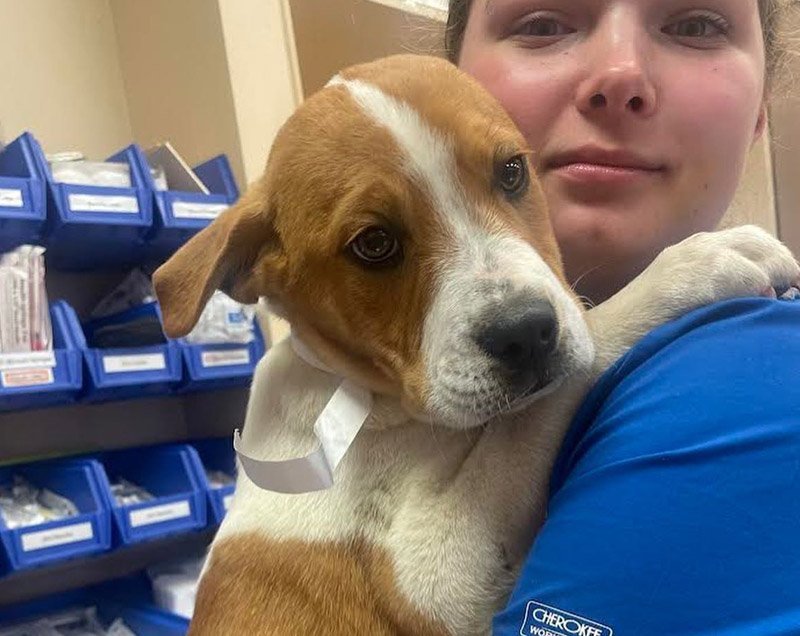
A door left open for ten seconds. A gate the landscaper forgot to latch. A thunderstorm, a startled dog, and a fence that suddenly seems climbable.

Pets go missing in ordinary moments, usually from homes where nobody was being careless. What can help ensure your pet comes home is often something as small as a rice sized chip placed under the skin during a routine appointment.

The microchip identification process is safe, easy, and virtually painless to your pet. At Noah’s Ark Animal Clinics, we can place a microchip during a wellness visit, during a scheduled procedure, or as a standalone appointment at any of our five locations across Greater Cincinnati and Northern Kentucky.

What is a Microchip?

A microchip is a small electronic identifier, roughly the size of a grain of rice, that carries a unique identification number. It is not a tracking device and does not use GPS or batteries. It has no power source at all.

When a scanner passes over the chip, it emits a low radio frequency that activates the chip, which then transmits its number back to the scanner. That number is matched to your contact information in a national recovery database, allowing whoever found your pet to reach you.

Because there is nothing to wear out, a microchip lasts your pet’s entire lifetime.

Why a Collar and Tags Are Not Enough

Identification tags are genuinely useful. They are the fastest way for a neighbor to return a wandering dog without involving anyone else, and every pet should wear them.

But tags fail in exactly the situations where you need them most. Collars slip off. Buckles break. Tags snag on fences and disappear. Engraving wears smooth over a few years of use. And a pet who bolts during a storm or slips out during a move may not be wearing a collar at all.

A microchip cannot fall off, cannot be removed by anyone who finds your pet, and does not wear down. Tags and microchips are not competing options. They are layers, and pets who have both are the most likely to make it home.

Does Microchipping Actually Work?

Yes, and the difference is substantial. Research on stray animals entering shelters has consistently found that microchipped dogs are returned to their owners at more than double the rate of dogs without chips, and the effect is also significant for cats, where microchipped cats are returned much more often than unchipped ones.

That gap has a lot to do with how cats are perceived. A loose dog reads as lost. A loose cat frequently reads as a stray, and without a chip there is often no way to prove otherwise. Indoor cats can easily be overlooked, because owners reasonably assume a cat who never goes outside does not need identification. Indoor cats do escape, and when they do, they tend to be poorly prepared for it.

One important caveat: microchips only work when the registration is current. A chip registered to a phone number from two moves ago will not help in returning a lost pet. Keeping your pet’s registration current matters the most.

What the Procedure Involves

Microchip placement is quick and requires no anesthesia.

Your pet’s microchip is inserted beneath the skin’s surface between their shoulders, using a needle similar in size to those used for routine vaccinations. The whole process takes only a few seconds. Most pets react about the same way they do to a vaccine, and many do not appear to notice.

There is no recovery period, no restrictions, and no aftercare. Your pet goes home and resumes their day immediately.

Some families choose to have the chip placed while their pet is already under anesthesia for a spay, neuter, or dental procedure, which is a convenient option if one is already scheduled and can ease any concerns about your pet’s discomfort. It is not necessary, though. A standalone appointment works just as well.

Registration in the HOME AGAIN Database

Placing the chip is only half the job. We then register your pet’s chip in the national Home Again recovery database, linking that identification number to your contact information.

If your pet ever goes missing, a quick scan by any rescue organization, shelter, or veterinary hospital can provide the necessary information to return your pet home. Scanners are standard equipment at shelters and veterinary clinics nationwide, and they read chips from any manufacturer.

Keep your registration current. This is the single most important thing you can do to make the microchip useful. Update your information whenever you:

  • Move to a new address
  • Change your phone number or email
  • Rehome or adopt a pet
  • Go through a change in household or ownership

It takes a few minutes online and it is the difference between a chip that works and a chip that does not.


Microchipping FAQ

Is it painful?
The insertion feels comparable to a vaccination. It is over in seconds and requires no sedation.


Can it be used to track my pet?
No. A microchip has no GPS and no battery. It only transmits its number when a scanner is directly over it. If you want live location tracking, that requires a separate GPS collar device, which serves a different purpose and does not replace a chip.


Will it move around under the skin?
Microchips are designed to stay in place, and most remain right where they were inserted. Occasional slight migration can happen, which is why staff scan the whole body rather than just one spot.


What if my pet already has a chip?
Bring them in and we will scan to confirm it is readable and help you verify the registration is current. Many pets adopted from shelters or rescues arrive already chipped, sometimes still registered to the previous organization.


Is there an age limit?
Puppies and kittens can be microchipped once they reach an appropriate size, often at the same time as their early vaccine series. There is no upper age limit.

Trusted Care Across Cincinnati, West Chester, and Northern Kentucky

Noah’s Ark Animal Clinics is proud to be AAHA Accredited, a distinction held by only a small percentage of veterinary practices in the United States, and has been named Best Veterinarian in Cincinnati by City Beat’s Best of Cincinnati in 2023, 2024, and 2025. With locations in Colerain, Springdale, West Chester, Florence, and Ft. Wright, microchipping is available close to home.

We are an independent, family owned practice that has served Cincinnati families for more than 100 years, and we treat your pet just like our own. A microchip is a small thing that takes only a moment, and could be the very thing that helps reunite you with your pet. It’s the kind of simple protection we’d want for our own pets, and we’re glad to offer it for yours.

Noah’s Ark Animal Clinics. Convenient. Affordable. Reliable.